Introduction
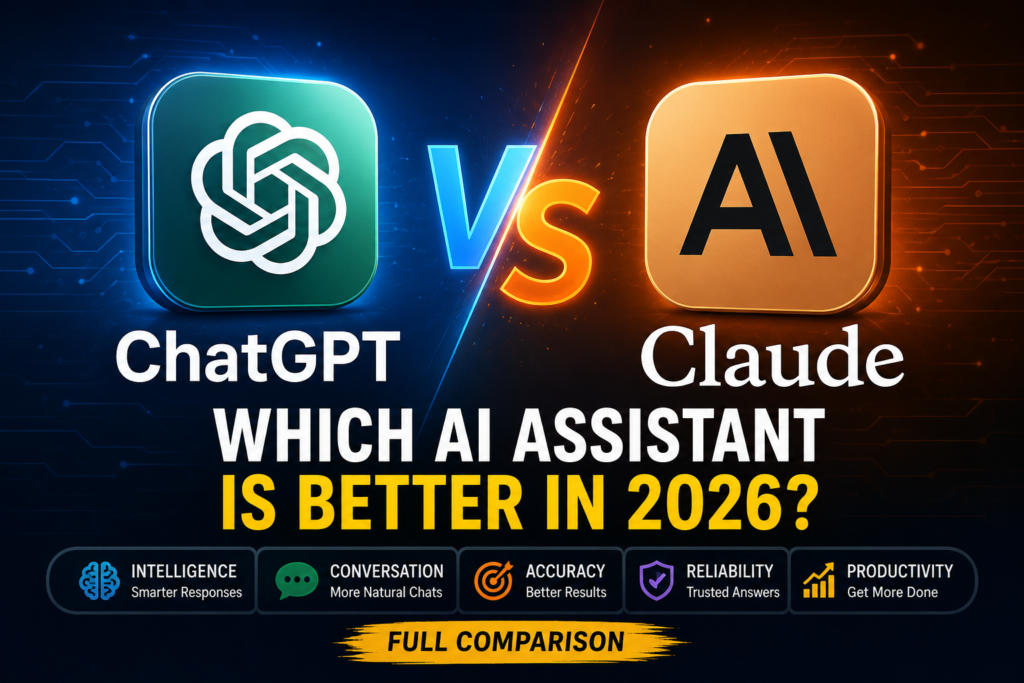
Artificial intelligence has become an essential part of how people work, learn, create content, and solve everyday problems. Among the many AI assistants available today, ChatGPT and Claude stand out as two of the most popular and capable options in 2026.
But which one is actually better?
ChatGPT vs Claude is no longer a simple comparison between two chatbots. Both platforms can help with writing, coding, research, document analysis, brainstorming, and many other tasks. At the same time, they have different strengths, features, workflows, and user experiences.
ChatGPT is known for its broad range of capabilities and all-in-one approach, while Claude has built a strong reputation for thoughtful writing, long-form content, document analysis, and coding. For some users, ChatGPT may be the better everyday AI assistant. For others, Claude may be the better choice.
In this ChatGPT vs Claude 2026 comparison, we’ll look at their features, pricing, writing ability, coding performance, research capabilities, document handling, image capabilities, pros and cons, and real-world use cases.
By the end of this guide, you’ll have a clear idea of whether ChatGPT or Claude is the better AI assistant for your specific needs in 2026.
ChatGPT vs Claude: Quick Comparison
If you’re trying to decide between ChatGPT and Claude, the right choice depends on what you want to accomplish. Both AI assistants are powerful, but each has its own strengths.
ChatGPT is a strong all-around option with a wide range of capabilities, including writing, coding, research, file analysis, voice conversations, and image-related tools.
Claude is particularly appealing for users who focus on long-form writing, detailed document analysis, coding, and thoughtful text-based workflows.
| Feature | ChatGPT | Claude |
|---|---|---|
| Overall Use | ⭐⭐⭐⭐⭐ | ⭐⭐⭐⭐½ |
| Writing | ⭐⭐⭐⭐⭐ | ⭐⭐⭐⭐⭐ |
| Coding | ⭐⭐⭐⭐⭐ | ⭐⭐⭐⭐⭐ |
| Research | ⭐⭐⭐⭐⭐ | ⭐⭐⭐⭐½ |
| Long Documents | ⭐⭐⭐⭐½ | ⭐⭐⭐⭐⭐ |
| Image Generation | ✅ Yes | ❌ No |
| Image Analysis | ✅ Yes | ✅ Yes |
| Voice | ✅ Yes | ✅ Available |
| File Analysis | ✅ Yes | ✅ Yes |
| Data Analysis | ✅ Yes | ✅ Yes |
| Free Plan | ✅ Yes | ✅ Yes |
| Best For | All-in-one AI | Writing & documents |
Which One Should You Choose?
Choose ChatGPT if you want a versatile AI assistant that can handle many different types of tasks from one platform.
Choose Claude if your main priorities are long-form writing, document analysis, and focused text or coding workflows.
Our quick verdict: 🏆 ChatGPT is the better overall choice for most users, while Claude can be the better choice for specific writing and document-heavy workflows.
Note: AI models, features, usage limits, and pricing can change frequently. Always check the official product pages for the latest information before making a subscription decision.
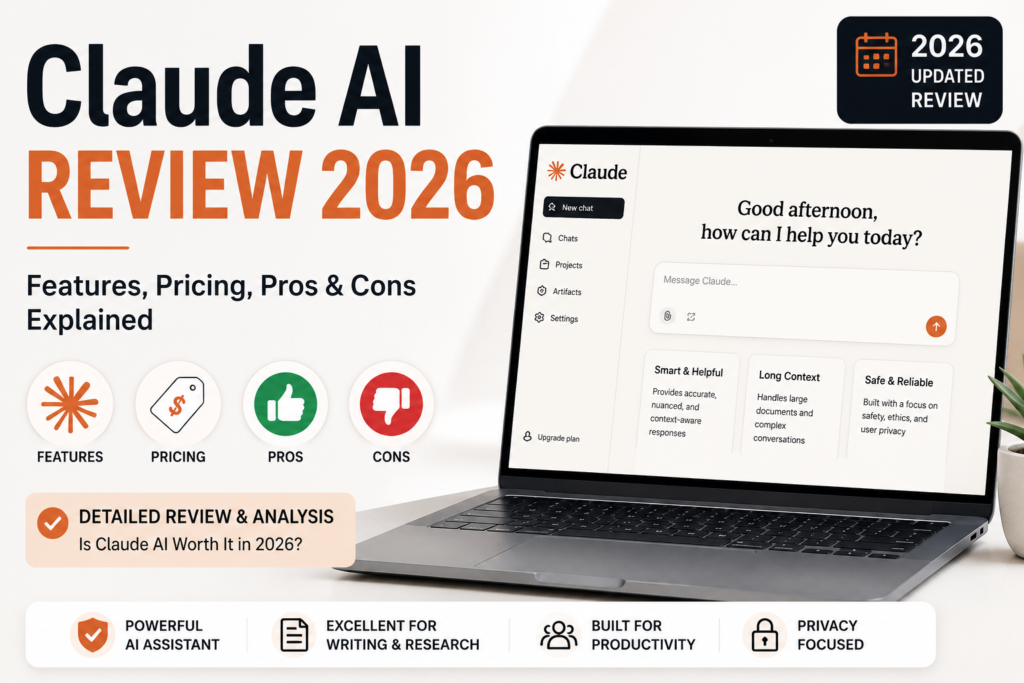
What Is Claude?
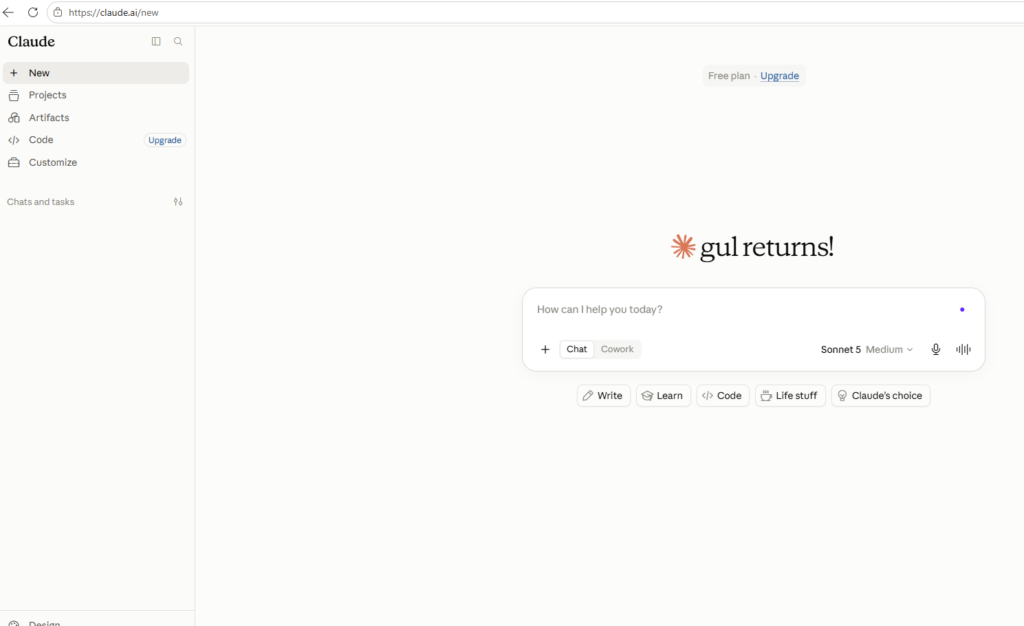
Claude is an AI assistant developed by Anthropic, an artificial intelligence company focused on building reliable and helpful AI systems. Like ChatGPT, Claude can understand natural-language instructions and assist users with a wide variety of tasks.
Claude is designed to be useful for both everyday questions and more complex work. It can help users write and edit content, analyze documents, understand code, summarize information, brainstorm ideas, and work through complicated problems.
Some of the common things you can use Claude for include:
- ✍️ Writing & Editing: Blog posts, articles, emails, reports, and other content
- 💻 Coding: Writing, explaining, debugging, and reviewing code
- 📄 Document Analysis: Reviewing and summarizing large documents
- 🔎 Research: Finding, organizing, and analyzing information
- 💡 Brainstorming: Developing ideas, strategies, and creative concepts
- 📚 Learning: Explaining complicated subjects in a simpler way
- 📊 Analysis: Helping interpret information and identify important insights
Why Is Claude Popular?
One of Claude’s major strengths is its focus on high-quality text-based work. It is particularly attractive to writers, developers, researchers, and professionals who frequently work with detailed instructions or large amounts of information.
Claude can also be useful when you want to take an existing piece of content and improve its structure, clarity, tone, or readability while keeping the original meaning.
For example, a content writer could give Claude a long article and ask it to identify weak sections, improve the flow, remove unnecessary repetition, and make the writing easier to understand.
Claude also supports features such as Projects, web search, Research, and coding-focused workflows, depending on the plan and current product availability.
Is Claude Better Than ChatGPT?
Not necessarily.
Claude and ChatGPT have different strengths. Claude can be an excellent choice for long-form writing, document-heavy tasks, and focused analysis, while ChatGPT offers a broader collection of capabilities for users who want an all-in-one AI assistant.
That’s why the ChatGPT vs Claude comparison is less about finding one universal winner and more about finding the AI assistant that fits your specific workflow.
Note: Claude’s models, features, plans, and usage limits can change over time. Always check Anthropic’s official website for the latest information before making a purchasing decision.
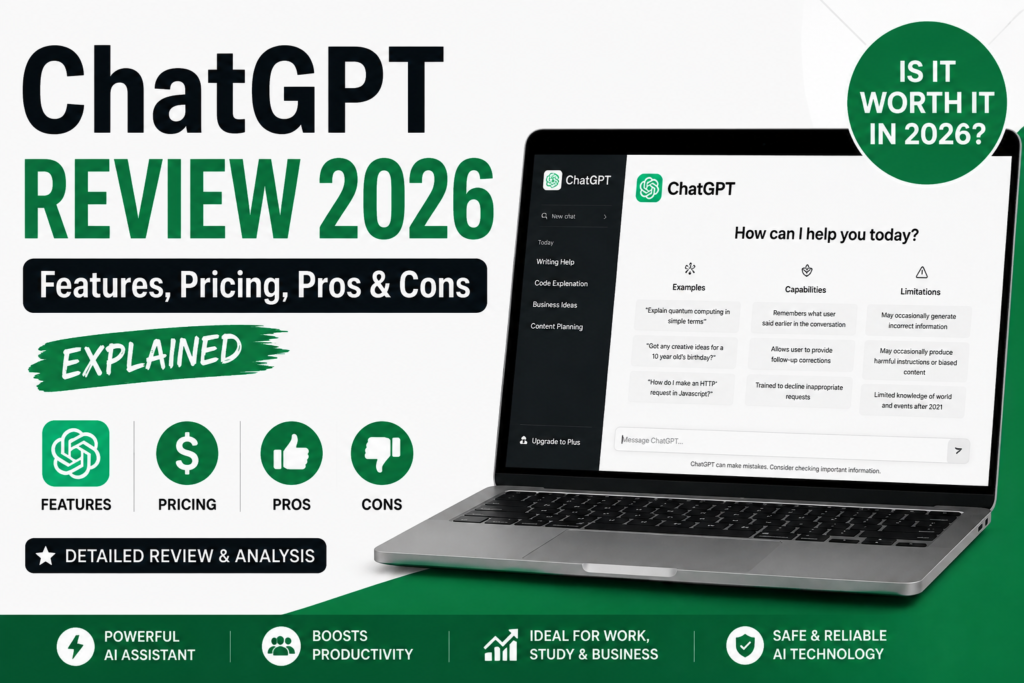
What Is ChatGPT?
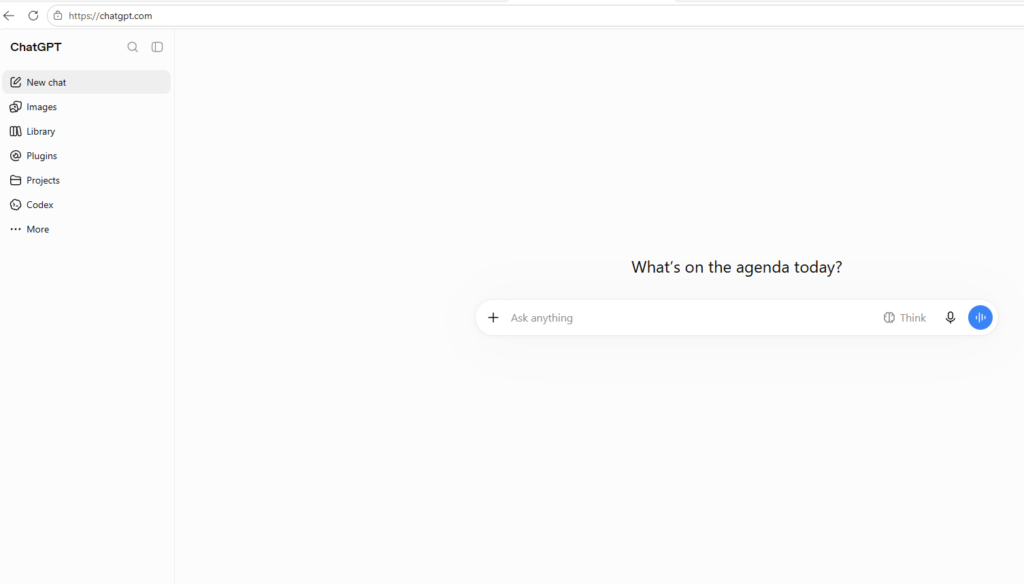
ChatGPT is an AI-powered assistant developed by OpenAI. It is designed to understand natural-language questions and instructions and provide useful responses across a wide range of tasks.
Unlike a traditional search engine, ChatGPT is built around an interactive conversation. You can ask follow-up questions, provide additional instructions, upload supported files or images, and refine the result until it matches what you need.
In 2026, ChatGPT can be used for many different purposes, including:
- ✍️ Writing: Blog posts, emails, scripts, product descriptions, and other content
- 💻 Coding: Writing, explaining, debugging, and reviewing code
- 🔎 Research: Finding and organizing information and helping with research tasks
- 📄 Document Analysis: Summarizing and analyzing supported files
- 📊 Data Analysis: Working with data and creating insights from supported datasets
- 🎨 Image Creation: Creating and editing images with supported features
- 🗣️ Voice Conversations: Interacting with ChatGPT through voice
- 💡 Brainstorming: Generating ideas for businesses, content, projects, and more
- 🎓 Learning: Explaining difficult concepts in simpler language
One of ChatGPT’s biggest advantages is its versatility. Instead of using separate AI tools for writing, research, coding, and creative tasks, many users can handle these activities within the same platform.
Why Is ChatGPT So Popular?
ChatGPT has become popular because it is relatively easy to use while being useful for both beginners and experienced users. You don’t need to learn complicated commands—you can simply describe what you want in normal language.
For example, a blogger could ask ChatGPT to research a topic, create an outline, write a draft, improve the content, suggest SEO ideas, and brainstorm social media posts.
However, ChatGPT isn’t perfect. AI-generated information can sometimes be incorrect or outdated, so important facts, statistics, prices, and claims should always be verified using reliable sources.
For this reason, ChatGPT is best viewed as an AI assistant rather than a replacement for human judgment.
ChatGPT vs Claude: Key Differences
Although ChatGPT and Claude are both powerful AI assistants, they are designed with somewhat different strengths and workflows. Choosing between them depends less on which AI is simply “smarter” and more on what you need an AI assistant to do every day.
Here are the key differences to consider in 2026.
1. Overall Capabilities
ChatGPT takes an all-in-one approach. Depending on the plan and available features, users can access tools for writing, web research, data analysis, file analysis, voice conversations, and image creation.
Claude focuses strongly on writing, reasoning, coding, document analysis, research, and other text-heavy workflows.
Best for versatility: ChatGPT
2. Writing and Content Creation
Both platforms are excellent for writing, but their writing styles can feel different.
ChatGPT is highly flexible and can produce content in many different formats and tones. It is useful for blog posts, social media content, emails, product descriptions, scripts, and marketing copy.
Claude is particularly popular for long-form writing, editing, restructuring, and working with detailed instructions. Many writers also appreciate its ability to maintain context and style when working through longer documents.
Best for overall content workflows: ChatGPT
Best for focused long-form writing: Claude
3. Research
Both ChatGPT and Claude offer web-based research capabilities, depending on the current plan and feature availability.
ChatGPT has a particularly broad research workflow because research can be combined with other capabilities such as file analysis, data analysis, writing, and image-related tools.
Claude also provides web search and Research features on supported plans, making it useful for gathering and analyzing information.
Best for an all-in-one research workflow: ChatGPT
4. Coding
Both AI assistants are capable coding tools.
ChatGPT can help developers write code, explain programming concepts, debug errors, review code, and work through technical problems.
Claude is also highly capable for programming and offers coding-focused workflows such as Claude Code on supported plans.
For professional developers, the best choice can depend on the programming language, project, model, IDE, and workflow being used.
Best choice: Tie — test both with your actual projects.
5. Image Generation
This is one of the clearest differences.
ChatGPT supports image creation and editing through its available image-generation capabilities.
Claude can understand and analyze images, but its product is primarily focused on text, documents, research, and coding rather than built-in image generation.
Winner: ChatGPT
6. Documents and Long Text
Both platforms can work with uploaded documents, but Claude is particularly attractive for users whose daily workflow revolves around large amounts of text.
Claude can be useful for reviewing reports, analyzing documents, summarizing information, and editing long-form content.
ChatGPT is also strong in document analysis and has the advantage of combining document work with other capabilities such as data analysis, research, and image-related tasks.
Best for document-focused workflows: Claude
Best for broader file workflows: ChatGPT
7. Voice Conversations
ChatGPT offers a strong voice-interaction experience, allowing users to have conversational interactions with the AI.
This can be useful for language practice, brainstorming, learning, asking quick questions, or interacting with an AI without constantly typing.
Winner for voice-focused use: ChatGPT
8. User Experience
ChatGPT offers a broad ecosystem of features, which makes it powerful but can sometimes feel like there is a lot to explore.
Claude has a more focused experience that can appeal to users who primarily want to write, analyze documents, research, or code.
Best choice: Depends on your preference.
ChatGPT vs Claude: Key Differences at a Glance
| Category | ChatGPT | Claude | Better Choice |
|---|---|---|---|
| Overall versatility | Excellent | Excellent | ChatGPT |
| Writing | Excellent | Excellent | Tie |
| Long-form documents | Excellent | Excellent | Claude |
| Research | Excellent | Excellent | ChatGPT |
| Coding | Excellent | Excellent | Tie |
| Image generation | Yes | No equivalent built-in feature | ChatGPT |
| Image analysis | Yes | Yes | Tie |
| Voice | Strong | Available | ChatGPT |
| Data analysis | Yes | Yes | ChatGPT |
| Focused text workflows | Excellent | Excellent | Claude |
The Bottom Line
The biggest difference between ChatGPT and Claude is breadth versus focus.
ChatGPT is the stronger all-around choice if you want one AI platform that can handle writing, research, coding, files, data, voice, and image-related tasks.
Claude is an excellent choice if your priorities are long-form writing, document analysis, coding, and focused text-based work.
Neither tool is the universal winner. The best choice depends on how you plan to use AI in your daily workflow.
ChatGPT vs Claude for Writing
When it comes to writing, ChatGPT and Claude are both excellent AI assistants, but they approach content creation somewhat differently. For bloggers, marketers, students, and professional writers, the better choice often depends on the type of content you create and how much editing you want to do afterward.
ChatGPT for Writing
ChatGPT is a versatile writing assistant that can create and improve many different types of content, including:
- Blog posts and articles
- SEO content
- Social media posts
- Emails
- Product descriptions
- Marketing copy
- Video scripts
- Business documents
- Headlines and content ideas
One of ChatGPT’s biggest advantages is flexibility. You can provide a specific tone, audience, structure, word count, and writing style, then refine the output through follow-up instructions.
For content creators, ChatGPT is especially useful when writing is part of a larger workflow. You can combine research, outlining, drafting, editing, brainstorming, and other tasks within the same AI platform.
Claude for Writing
Claude is also a strong writing assistant and is particularly appealing for long-form content, editing, rewriting, and document-based work.
It can help writers:
- Develop detailed article drafts
- Rewrite existing content
- Improve clarity and flow
- Edit long documents
- Maintain a consistent tone
- Summarize large amounts of text
- Organize complex ideas
Claude can be especially useful when you already have a substantial amount of content and want the AI to analyze or improve it without losing the original context.
ChatGPT vs Claude: Writing Quality
There is no universal winner when it comes to writing quality.
ChatGPT may be preferable when you want more creative flexibility, different content formats, and a broader content workflow.
Claude may be preferable when you want focused long-form writing, editing, and detailed text analysis.
The quality of the final result also depends heavily on your prompt. A clear prompt that explains the target audience, purpose, tone, structure, and requirements can significantly improve the output from either AI.
Which Is Better for SEO Writing?
For SEO content, both can be useful.
ChatGPT can help with:
- Keyword-based content planning
- Article outlines
- Search-intent analysis
- Meta titles and descriptions
- FAQ ideas
- Content optimization
- Internal linking suggestions
Claude can help with:
- Long-form article drafting
- Content restructuring
- Improving readability
- Editing existing articles
- Identifying repetition and weak sections
For an affiliate website such as FutureToolsHQ, ChatGPT can be particularly useful as an all-in-one content workflow, while Claude can be valuable as a second editor for improving long-form drafts.
ChatGPT vs Claude for Writing: Quick Verdict
| Writing Task | Better Choice |
|---|---|
| Blog posts | Tie |
| SEO content | ChatGPT |
| Long-form writing | Claude |
| Editing | Claude |
| Creative brainstorming | ChatGPT |
| Marketing copy | ChatGPT |
| Rewriting | Tie |
| Social media content | ChatGPT |
| Large document editing | Claude |
| Overall writing workflow | ChatGPT |
Final Verdict
If you want a flexible AI writing assistant that can handle content creation, SEO, research, brainstorming, and other tasks, ChatGPT is the better overall choice.
If your main priority is long-form writing, detailed editing, and working with large amounts of text, Claude is an excellent alternative.
Our winner for overall writing workflows: ChatGPT 🏆
Our pick for long-form editing and document-focused writing: Claude ✍️
The best approach for professional content creators may be to use both: create and research with ChatGPT, then use Claude as an additional editor when a second perspective can improve the final article.
ChatGPT vs Claude for Coding
For coding, both ChatGPT and Claude are powerful AI assistants, but they have different strengths. ChatGPT is particularly strong for debugging, code generation, technical explanations, and working across different programming tasks. Claude is also excellent for writing and reviewing code, especially when working with large codebases and long files.
ChatGPT vs Claude for Coding: Quick Comparison
| Feature | ChatGPT | Claude |
|---|---|---|
| Code Generation | ⭐⭐⭐⭐⭐ | ⭐⭐⭐⭐⭐ |
| Debugging | ⭐⭐⭐⭐⭐ | ⭐⭐⭐⭐⭐ |
| Code Explanation | ⭐⭐⭐⭐⭐ | ⭐⭐⭐⭐⭐ |
| Large Codebases | ⭐⭐⭐⭐⭐ | ⭐⭐⭐⭐⭐ |
| Refactoring | ⭐⭐⭐⭐⭐ | ⭐⭐⭐⭐⭐ |
| Complex Problems | ⭐⭐⭐⭐⭐ | ⭐⭐⭐⭐⭐ |
| Web Development | ⭐⭐⭐⭐⭐ | ⭐⭐⭐⭐⭐ |
| Long Code Files | ⭐⭐⭐⭐⭐ | ⭐⭐⭐⭐⭐ |
| Coding Workflow | ⭐⭐⭐⭐⭐ | ⭐⭐⭐⭐⭐ |
| Beginner Friendly | ⭐⭐⭐⭐⭐ | ⭐⭐⭐⭐⭐ |
What Is ChatGPT Good at for Coding?
ChatGPT can help developers with almost every stage of the coding process. You can describe what you want to build and ask it to generate code, explain existing code, find bugs, improve performance, or help design an application.
It is useful for languages and technologies such as:
- Python
- JavaScript
- TypeScript
- HTML & CSS
- React
- Node.js
- PHP
- Java
- C++
- SQL
- WordPress
- APIs
One of ChatGPT’s biggest advantages is that it can combine coding with reasoning, research, documentation, and troubleshooting. This makes it useful when a coding problem requires more than simply generating a code snippet.
What Is Claude Good at for Coding?
Claude has developed a strong reputation among developers for handling large amounts of code and working through complex programming tasks.
It can help with:
- Writing new code
- Debugging
- Refactoring
- Reviewing code
- Understanding existing projects
- Creating functions and components
- Working with large files
- Explaining technical concepts
- Improving code structure
Claude can be particularly useful when you give it a large amount of existing code and ask it to understand how different parts of the project work together.
ChatGPT vs Claude for Code Generation
Both can generate high-quality code from natural-language instructions.
For example, you could ask:
“Create a responsive pricing page using HTML, CSS, and JavaScript.”
Both ChatGPT and Claude can produce the implementation.
ChatGPT has an advantage when the task requires step-by-step reasoning, debugging, explanations, and additional research alongside the code.
Claude can be excellent when you want clean, readable code and a strong focus on the overall structure of a large implementation.
Winner: Tie
ChatGPT vs Claude for Debugging
Debugging is one of the most important uses of AI coding assistants.
You can provide an error message, problematic code, or project structure and ask the AI to identify the problem.
ChatGPT is particularly useful when you want:
- The cause of the error
- An explanation of why it happened
- A corrected version
- Instructions for testing the fix
- Suggestions to prevent the problem in the future
Claude is also very capable of debugging and can be especially helpful when the bug involves multiple files or a larger codebase.
Winner: ChatGPT — slight edge
ChatGPT vs Claude for Large Codebases
Large projects are where Claude can become particularly attractive.
When working with a large amount of code, Claude can analyze relationships between different files and components and help developers understand or modify an existing codebase.
ChatGPT is also very capable with large projects, particularly when using its file and coding tools.
Winner: Claude — slight edge
ChatGPT vs Claude for Web Development
For web development, both are excellent choices.
You can use either AI to build:
- Landing pages
- WordPress websites
- React applications
- SaaS dashboards
- E-commerce websites
- Forms
- Navigation systems
- Responsive layouts
- JavaScript functionality
- APIs
ChatGPT has a slight advantage if you need a combination of coding + research + troubleshooting + explanations.
Claude can be excellent when you’re asking it to work through a larger implementation or improve an existing codebase.
Winner: ChatGPT — slight edge
ChatGPT vs Claude for Beginners
For beginners, ChatGPT has an important advantage: it can explain programming concepts in very simple language and adapt explanations to the user’s skill level.
For example, instead of simply giving you a Python function, you can ask:
“Explain this code line by line like I’m a complete beginner.”
ChatGPT can then walk through the code and explain what each part does.
Claude can do this as well, but ChatGPT’s broader interactive learning and problem-solving workflow make it particularly useful for beginners.
Winner: ChatGPT
ChatGPT vs Claude for Professional Developers
Professional developers may benefit from using both.
ChatGPT can be useful for:
- Debugging
- Research
- Architecture discussions
- Documentation
- Code generation
- Learning unfamiliar technologies
Claude can be useful for:
- Large codebases
- Refactoring
- Code reviews
- Long files
- Complex implementation tasks
Instead of thinking of one as a complete replacement for the other, experienced developers can use each where it performs best.
ChatGPT vs Claude for Coding: Final Verdict
If you’re looking for one AI coding assistant, ChatGPT is the better overall choice for most users.
ChatGPT wins for:
- Overall coding assistance
- Debugging
- Learning programming
- Research + coding
- Technical explanations
- Web development
- General-purpose development
Claude wins for:
- Large codebases
- Long coding tasks
- Code refactoring
- Working through large amounts of existing code
🏆 Overall Winner: ChatGPT
ChatGPT vs Claude for Coding: ChatGPT wins overall, but Claude is an excellent choice for large-codebase and long-context development work.
For developers who frequently work with large projects, using both ChatGPT and Claude together can actually be more powerful than relying on either one alone.
ChatGPT vs Claude for Image Generation
When it comes to AI image generation, ChatGPT and Claude are very different. ChatGPT can generate and edit images directly, while Claude is primarily focused on text, reasoning, coding, and document-based tasks rather than being a dedicated image-generation tool.
ChatGPT vs Claude for Image Generation: Quick Comparison
| Feature | ChatGPT | Claude |
|---|---|---|
| AI Image Generation | ⭐⭐⭐⭐⭐ | ⭐ |
| Image Editing | ⭐⭐⭐⭐⭐ | ⭐⭐ |
| Text in Images | ⭐⭐⭐⭐⭐ | ⭐ |
| Creative Designs | ⭐⭐⭐⭐⭐ | ⭐ |
| Marketing Graphics | ⭐⭐⭐⭐⭐ | ⭐ |
| Social Media Images | ⭐⭐⭐⭐⭐ | ⭐ |
| Image Analysis | ⭐⭐⭐⭐⭐ | ⭐⭐⭐⭐⭐ |
| Photorealistic Images | ⭐⭐⭐⭐⭐ | — |
| Logos & Visual Concepts | ⭐⭐⭐⭐⭐ | — |
| Overall Image Creation | ⭐⭐⭐⭐⭐ | ⭐ |
What Is ChatGPT Good at for Image Generation?
ChatGPT can generate images directly from natural-language prompts. You can describe the image you want, including the subject, style, composition, lighting, colors, dimensions, and overall visual direction.
For example, you can ask ChatGPT to create:
- Blog featured images
- YouTube thumbnails
- Pinterest graphics
- Social media posts
- Product concepts
- Website hero images
- Infographics
- Illustrations
- Marketing graphics
- Photorealistic scenes
- AI tool comparison graphics
ChatGPT can also edit existing images, allowing you to make changes to an image rather than starting from scratch.
What Is Claude Good at for Images?
Claude is not primarily an image-generation platform. Its biggest strengths are text, reasoning, coding, document analysis, and research.
Claude can work with images as inputs in supported experiences, meaning you can upload an image and ask Claude to analyze or describe it.
For example, Claude can help you:
- Analyze an image
- Extract information from a chart
- Describe an image
- Review a design
- Suggest improvements
- Analyze screenshots
However, if your goal is actually creating a new AI-generated image, Claude is not the stronger choice.
ChatGPT vs Claude for Creative Images
ChatGPT is the clear winner for creative image generation.
You can give it a simple idea such as:
“Create a futuristic AI technology hero image for a technology website.”
It can turn that concept into a complete visual.
You can also refine the result with additional instructions, such as changing the composition, style, lighting, objects, or background.
Winner: ChatGPT 🏆
ChatGPT vs Claude for Image Editing
ChatGPT also has a major advantage for image editing.
You can provide an existing image and request changes such as:
- Remove an object
- Change the background
- Add an element
- Change the style
- Improve the composition
- Create a different version
- Modify colors
- Turn a photograph into an illustration
Claude can analyze an image and give you recommendations, but it isn’t primarily an image-editing generator.
Winner: ChatGPT 🏆
ChatGPT vs Claude for Blog Images
For bloggers and affiliate marketers, ChatGPT is much more useful for creating blog visuals.
For example, you could create a featured image for an article such as:
“ChatGPT vs Claude: Which AI Assistant Is Better in 2026?”
You can create a professional comparison graphic containing the two AI assistants, appropriate visual elements, and a clean technology-focused design.
Winner: ChatGPT 🏆
ChatGPT vs Claude for Social Media Images
ChatGPT is also better suited to creating visuals for:
- YouTube
- X
You can specify the platform and desired dimensions and create a design appropriate for that platform.
Winner: ChatGPT 🏆
Final Verdict
If your primary goal is AI image generation, there isn’t much of a contest.
🏆 Overall Winner: ChatGPT
ChatGPT is the clear winner for image generation because it can create and edit images directly, while Claude is primarily designed for text, reasoning, coding, research, and document tasks.
| Use Case | Winner |
|---|---|
| Image Generation | 🏆 ChatGPT |
| Image Editing | 🏆 ChatGPT |
| Blog Images | 🏆 ChatGPT |
| Social Media Graphics | 🏆 ChatGPT |
| Marketing Visuals | 🏆 ChatGPT |
| Image Analysis | 🤝 Both |
| Text & Reasoning | 🏆 Claude |
| Coding | 🤝 Both |
| Research | 🤝 Both |
Bottom line: If you want an AI assistant that can think, write, research, code, and generate images, ChatGPT is the more versatile choice. Claude is excellent for reasoning and coding, but ChatGPT is the better option specifically for image generation.
ChatGPT vs Claude for File and Document Analysis
When it comes to file and document analysis, both ChatGPT and Claude are powerful AI assistants. They can analyze PDFs, Word documents, spreadsheets, presentations, and other files, summarize information, extract important details, and answer questions based on uploaded documents.
However, their strengths differ depending on the type and size of the documents you work with.
ChatGPT vs Claude for File and Document Analysis: Quick Comparison
| Feature | ChatGPT | Claude |
|---|---|---|
| PDF Analysis | ⭐⭐⭐⭐⭐ | ⭐⭐⭐⭐⭐ |
| Word Documents | ⭐⭐⭐⭐⭐ | ⭐⭐⭐⭐⭐ |
| Excel / Spreadsheets | ⭐⭐⭐⭐⭐ | ⭐⭐⭐⭐⭐ |
| PowerPoint Files | ⭐⭐⭐⭐⭐ | ⭐⭐⭐⭐⭐ |
| Large Documents | ⭐⭐⭐⭐⭐ | ⭐⭐⭐⭐⭐ |
| Summarization | ⭐⭐⭐⭐⭐ | ⭐⭐⭐⭐⭐ |
| Data Analysis | ⭐⭐⭐⭐⭐ | ⭐⭐⭐⭐ |
| Document Comparison | ⭐⭐⭐⭐⭐ | ⭐⭐⭐⭐⭐ |
| Information Extraction | ⭐⭐⭐⭐⭐ | ⭐⭐⭐⭐⭐ |
| Complex Document Analysis | ⭐⭐⭐⭐⭐ | ⭐⭐⭐⭐⭐ |
| Overall | 🏆 ChatGPT | Excellent |
ChatGPT for File and Document Analysis
ChatGPT can analyze uploaded files and help you understand information contained in them.
You can upload documents such as:
- PDF files
- Word documents
- Excel spreadsheets
- CSV files
- PowerPoint presentations
- Text files
- Research papers
- Business reports
For example, you can upload a long PDF and ask:
“Summarize this document and give me the five most important points.”
You can also ask ChatGPT to locate specific information, explain complicated sections, compare documents, extract data, or analyze numbers from spreadsheets.
One major advantage is that ChatGPT can combine document analysis with reasoning and data analysis. This makes it useful when the file contains both written information and structured data.
Claude for File and Document Analysis
Claude is also extremely capable when working with documents.
It is particularly strong at understanding long documents and large amounts of text while maintaining the context between different sections.
You can use Claude to:
- Summarize lengthy reports
- Analyze research papers
- Review contracts
- Compare documents
- Extract key information
- Analyze business documents
- Review technical documentation
- Understand large text-heavy files
Claude’s ability to work with large amounts of contextual information makes it a strong choice for users who regularly deal with lengthy documents.
ChatGPT vs Claude for PDF Analysis
Both ChatGPT and Claude are excellent for PDF analysis.
ChatGPT can summarize a PDF, answer questions about it, extract information, analyze tables, and combine the document’s information with additional reasoning or analysis.
Claude is particularly strong when the PDF contains a large amount of continuous text and you want a detailed understanding of the document.
Winner: Tie 🤝
ChatGPT vs Claude for Large Documents
Large documents are an area where Claude has historically been particularly strong because of its large context capabilities.
For example, if you’re analyzing a lengthy research report, technical specification, or collection of documents, Claude can be very effective at maintaining context across the material.
ChatGPT is also highly capable with large files and can perform sophisticated analysis, especially when the task involves calculations, structured data, or combining multiple types of information.
Winner: Claude — slight edge for very long text-heavy documents
ChatGPT vs Claude for Excel and Data Analysis
This is where ChatGPT has a strong advantage.
ChatGPT can analyze spreadsheets and structured data, perform calculations, identify patterns, create summaries, and help interpret the results.
For example, you could upload a sales spreadsheet and ask:
“Analyze this year’s sales data and identify the products with the highest growth.”
ChatGPT can perform the analysis and present the findings in a clear format.
Claude can also analyze spreadsheets and structured information, but ChatGPT is generally the stronger choice when the task involves data analysis and calculations.
Winner: ChatGPT 🏆
ChatGPT vs Claude for Research Papers
Both are excellent for research papers.
You can use either tool to:
- Summarize papers
- Extract research findings
- Identify methodologies
- Explain difficult concepts
- Compare multiple papers
- Find important conclusions
- Create research notes
Claude is particularly good at maintaining the context of long academic documents, while ChatGPT has an advantage when you want to combine document analysis with broader research and data analysis.
Winner: ChatGPT — slight edge
ChatGPT vs Claude for Business Documents
For business documents such as reports, proposals, contracts, presentations, and financial documents, both platforms are highly capable.
ChatGPT is particularly useful when you want to analyze the document and then transform the information into another useful format, such as a summary, table, report, presentation outline, or action plan.
Claude is excellent when the primary goal is reading and understanding a large amount of text.
Winner: ChatGPT — slight edge
ChatGPT vs Claude for Document Comparison
Both tools can compare two or more documents.
For example, you can provide two versions of a contract and ask:
“Identify the important differences between these two documents.”
The AI can identify changes in wording, clauses, requirements, dates, and other important information.
For detailed comparison workflows, the quality of the result still depends on the document format and the instructions you provide.
Winner: Tie 🤝
Which Is Better for File and Document Analysis?
Choose ChatGPT if you need:
- PDF analysis
- Spreadsheet analysis
- Data analysis
- Document summaries
- Research paper analysis
- Multiple-file analysis
- Calculations
- Structured reports
- Document-to-report workflows
- File analysis combined with research
Choose Claude if you need:
- Very long text-heavy documents
- Large-context analysis
- Long reports
- Detailed document comprehension
- Literature and text-heavy research
- Extensive document-based conversations
Final Verdict
For overall file and document analysis, ChatGPT gets the edge because it combines strong document understanding with data analysis, calculations, reasoning, and broader workflows.
Claude remains an excellent choice, especially when your work involves very long, text-heavy documents where maintaining context is the primary requirement.
🏆 Overall Winner: ChatGPT
ChatGPT vs Claude for File and Document Analysis: ChatGPT wins overall, while Claude is a particularly strong option for analyzing very long text-heavy documents.
| Use Case | Winner |
|---|---|
| PDF Analysis | 🤝 Tie |
| Long Documents | 🏆 Claude |
| Excel / Data Analysis | 🏆 ChatGPT |
| Research Papers | 🏆 ChatGPT |
| Document Summarization | 🤝 Tie |
| Document Comparison | 🤝 Tie |
| Business Documents | 🏆 ChatGPT |
| Complex File Analysis | 🏆 ChatGPT |
| Overall | 🏆 ChatGPT |
Bottom line: If you want one AI tool for PDFs, spreadsheets, research papers, business documents, calculations, and general file analysis, ChatGPT is the better all-around choice.
ChatGPT vs Claude for Voice Conversations
Voice conversations are becoming an important part of AI assistants. Both ChatGPT and Claude allow users to interact with AI using natural language, but ChatGPT has a clear advantage when it comes specifically to real-time voice conversations.
ChatGPT vs Claude for Voice Conversations: Quick Comparison
| Feature | ChatGPT | Claude |
|---|---|---|
| Voice Conversations | ⭐⭐⭐⭐⭐ | ⭐⭐⭐ |
| Natural Voice Interaction | ⭐⭐⭐⭐⭐ | ⭐⭐⭐ |
| Real-Time Conversation | ⭐⭐⭐⭐⭐ | ⭐⭐⭐ |
| Voice Response Quality | ⭐⭐⭐⭐⭐ | ⭐⭐⭐ |
| Voice Interruption | ⭐⭐⭐⭐⭐ | ⭐⭐⭐ |
| Hands-Free Use | ⭐⭐⭐⭐⭐ | ⭐⭐⭐ |
| Language Support | ⭐⭐⭐⭐⭐ | ⭐⭐⭐⭐ |
| Voice + AI Reasoning | ⭐⭐⭐⭐⭐ | ⭐⭐⭐⭐⭐ |
| Overall Voice Experience | 🏆 Excellent | Good |
ChatGPT for Voice Conversations
ChatGPT has a dedicated voice experience designed for natural, back-and-forth conversations.
Instead of speaking and waiting for a traditional voice-to-text response, you can have a more conversational interaction with ChatGPT.
You can use voice conversations for:
- Asking questions
- Learning new topics
- Practicing languages
- Brainstorming ideas
- Getting explanations
- Having casual conversations
- Discussing work
- Getting help while you’re busy
One of the biggest advantages is that the interaction feels closer to a real conversation rather than simply dictating text to an AI.
Claude for Voice Conversations
Claude is primarily known for its text-based AI experience, reasoning, coding, research, and document analysis.
While Claude can work with voice-related workflows and Anthropic has continued expanding its capabilities, voice conversation is not its main strength compared with ChatGPT’s dedicated voice experience.
Claude’s biggest strengths remain:
- Writing
- Coding
- Research
- Reasoning
- Document analysis
- Long-context tasks
Therefore, if your primary reason for choosing an AI assistant is voice interaction, Claude is not as compelling as ChatGPT.
ChatGPT vs Claude for Natural Conversations
ChatGPT is designed to handle conversational interactions with relatively natural back-and-forth dialogue.
You can ask a question, interrupt the conversation, clarify your request, and continue talking without constantly switching between typing and speaking.
This makes it useful for situations where you want the AI to behave more like a personal voice assistant.
Winner: ChatGPT 🏆
ChatGPT vs Claude for Language Learning
Voice mode can be particularly useful for learning languages.
For example, you can ask ChatGPT to:
“Speak with me in English and correct my grammar whenever I make a mistake.”
You can then practice speaking naturally instead of simply writing answers.
ChatGPT can also adjust the difficulty of the conversation and explain mistakes.
Winner: ChatGPT 🏆
ChatGPT vs Claude for Hands-Free Use
ChatGPT’s voice experience makes it useful when you don’t want to type.
For example, you can use it while:
- Walking
- Cooking
- Driving (without interacting with the device manually)
- Exercising
- Brainstorming
- Learning
The ability to have a continuous conversation makes ChatGPT particularly useful as a hands-free assistant.
Winner: ChatGPT 🏆
ChatGPT vs Claude for Voice + Reasoning
This is an interesting category because both AI models are capable of sophisticated reasoning.
Claude can be excellent at complex reasoning, but ChatGPT combines its reasoning capabilities with a mature voice interaction experience.
That means you can talk through a complicated problem instead of typing it.
For example:
“I’m planning a website for an AI tools affiliate business. Ask me questions one at a time and help me build the plan.”
This kind of conversational brainstorming works particularly well with voice.
Winner: ChatGPT 🏆
Which Is Better for Voice Conversations?
Choose ChatGPT if you want:
- Natural voice conversations
- Real-time interaction
- Hands-free AI assistance
- Language practice
- Voice brainstorming
- Conversational learning
- A voice-based personal assistant
Choose Claude if you mainly want:
- Coding
- Writing
- Research
- Document analysis
- Complex text-based reasoning
Final Verdict
For voice conversations, ChatGPT is the clear winner.
Claude is an excellent AI assistant, but voice interaction is not its primary competitive advantage. ChatGPT’s dedicated voice experience makes it much better suited for people who want to talk to an AI naturally rather than communicate primarily through text.
🏆 Overall Winner: ChatGPT
ChatGPT vs Claude for Voice Conversations: ChatGPT wins comfortably.
| Use Case | Winner |
|---|---|
| Voice Conversations | 🏆 ChatGPT |
| Natural Dialogue | 🏆 ChatGPT |
| Real-Time Interaction | 🏆 ChatGPT |
| Language Practice | 🏆 ChatGPT |
| Hands-Free Assistance | 🏆 ChatGPT |
| Complex Reasoning | 🤝 Both |
| Coding | 🤝 Both |
| Writing | 🏆 Claude |
| Research | 🤝 Both |
| Overall Voice Experience | 🏆 ChatGPT |
Bottom line: If your main priority is talking to an AI naturally using your voice, choose ChatGPT. If your priority is text-based coding, writing, or research, Claude remains a strong alternative.
ChatGPT vs Claude Pricing
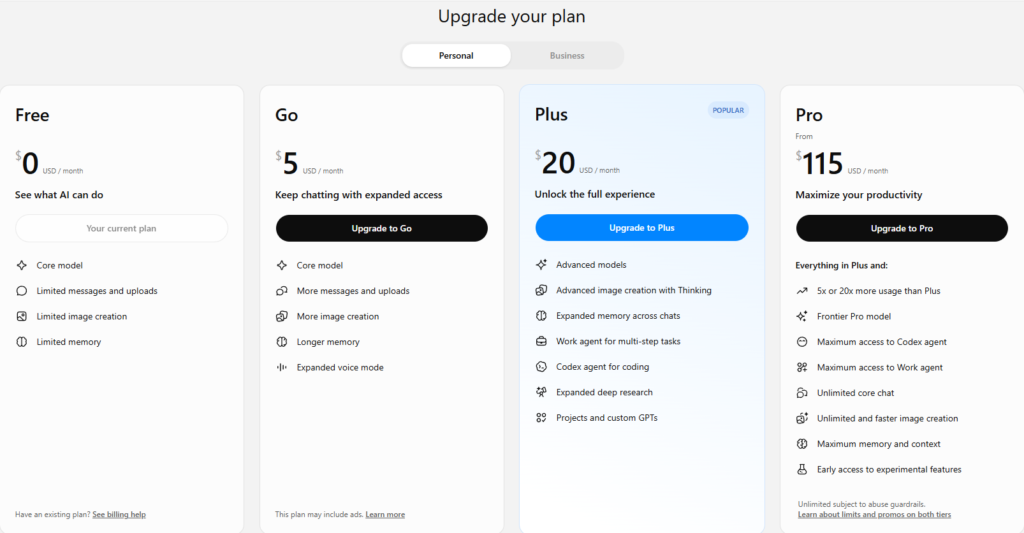
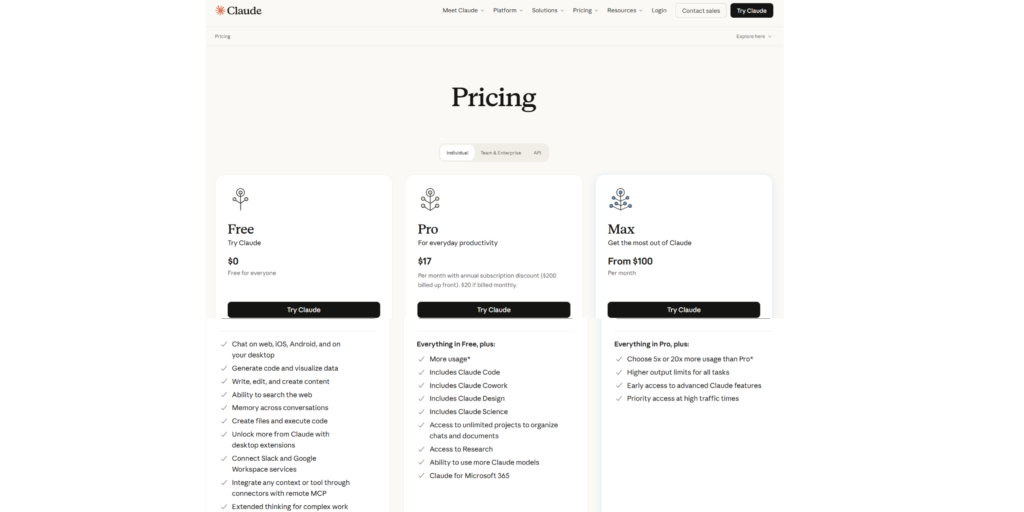
Pricing is one of the biggest factors when choosing between ChatGPT and Claude. Both offer free plans, but their paid plans differ in price, usage limits, advanced features, and higher-tier options.
ChatGPT vs Claude Pricing: Quick Comparison
| Plan | ChatGPT | Claude |
|---|---|---|
| Free | $0/month | $0/month |
| Entry Paid Plan | Go $8/month | Pro $20/month |
| Standard Paid Plan | Plus $20/month | Pro $20/month |
| Higher Usage | Pro $100/month | Max 5x $100/month |
| Maximum Individual Tier | Pro $200/month | Max 20x $200/month |
| Team | Business plans available | Team plans available |
OpenAI currently lists ChatGPT Free, Go, Plus, Pro, Business, and Enterprise plans. ChatGPT Plus costs $20/month, while Pro has $100 and $200 tiers depending on the required usage level.
Anthropic currently offers Claude Free, Pro, Max 5x, Max 20x, Team, and Enterprise options.
ChatGPT Free vs Claude Free
Both platforms offer a $0 free plan, making them accessible to users who don’t want to pay.
ChatGPT’s Free plan currently includes limited access to uploads, image generation, voice conversations, deep research, memory, and Codex.
Claude also offers a free tier with access to Claude’s core experience, although usage limits apply.
Winner: Tie 🤝
If you are just starting with AI, either free plan can be a good option.
ChatGPT Plus vs Claude Pro
This is probably the most important comparison for individual users.
ChatGPT Plus — $20/month
ChatGPT Plus provides broader access to advanced models and tools, including expanded uploads, image creation, deep research, memory, projects, custom GPTs, and expanded Codex access.
Claude Pro — $20/month
Claude Pro is also priced at $20/month and provides higher usage limits and access to additional Claude capabilities compared with the free plan. Claude Pro also includes access to Claude Code.
So at the standard paid level:
ChatGPT Plus: $20/month
Claude Pro: $20/month
Winner: Tie 🤝
The better value depends on which features you actually use.
ChatGPT Go vs Claude Pro
ChatGPT has an additional Go plan at $8/month in its current pricing structure.
This gives ChatGPT an advantage for users who want to spend less than $20/month while getting more than the basic Free experience.
Claude’s standard individual paid option starts with Pro at $20/month.
Winner: ChatGPT 🏆
ChatGPT Pro vs Claude Max
For heavy users, both companies offer much more expensive plans.
ChatGPT Pro currently has:
- $100/month — 5× the usage of Plus
- $200/month — 20× the usage of Plus
Both tiers provide the same core Pro capabilities; the main difference is usage allowance.
Claude offers:
- Max 5x — $100/month
- Max 20x — $200/month
These plans are designed for people who use Claude frequently and need substantially higher usage limits.
So at the high-end:
ChatGPT Pro $100 ↔ Claude Max 5x $100
ChatGPT Pro $200 ↔ Claude Max 20x $200
Winner: Tie 🤝
ChatGPT vs Claude for Value
If you’re looking at features per dollar, ChatGPT has an advantage because its ecosystem includes several different capabilities under one subscription.
With ChatGPT Plus, you get access to things such as:
- Advanced reasoning
- Image generation
- Deep Research
- File uploads
- Voice
- Projects
- Custom GPTs
- Codex
- Memory
Claude’s paid plans are particularly attractive if your primary needs are:
- Writing
- Coding
- Long-context work
- Research
- Claude Code
- Agentic workflows
Claude’s Max plans also provide significantly higher usage for heavy users.
Winner: ChatGPT — slight edge for overall value
Which Is Cheaper?
If we compare the main individual plans:
Free:
ChatGPT $0 vs Claude $0 → Tie
Entry paid:
ChatGPT Go $8 vs Claude Pro $20 → ChatGPT
Standard paid:
ChatGPT Plus $20 vs Claude Pro $20 → Tie
Heavy use:
ChatGPT Pro $100/$200 vs Claude Max $100/$200 → Tie
Final Verdict
🏆 Best Pricing for Most Users: ChatGPT
ChatGPT offers more pricing flexibility, especially because its $8/month Go plan sits below the $20/month Plus and Claude Pro tiers.
At the $20 level, however, ChatGPT Plus and Claude Pro cost the same, so the decision should be based more on features than price.
| Category | Winner |
|---|---|
| Free Plan | 🤝 Tie |
| Cheapest Paid Plan | 🏆 ChatGPT |
| $20 Plan | 🤝 Tie |
| $100 Plan | 🤝 Tie |
| $200 Plan | 🤝 Tie |
| Features per Dollar | 🏆 ChatGPT |
| Heavy Coding Use | 🤝 Both |
| Image Generation | 🏆 ChatGPT |
| Voice | 🏆 ChatGPT |
| Research | 🤝 Both |
| Overall Value | 🏆 ChatGPT |
Bottom line: If you’re looking for the best overall value, ChatGPT is the better choice because it offers more pricing flexibility and bundles a wider range of features into its paid plans. Claude becomes especially attractive if your main focus is coding, long-context work, and high-volume usage.
ChatGPT Pros and Cons
ChatGPT has become one of the most popular AI assistants because it combines writing, research, coding, image generation, voice conversations, file analysis, and other AI-powered features in one platform. However, it also has some limitations that users should consider before choosing it.
ChatGPT Pros and Cons: Quick Overview
| Pros | Cons |
|---|---|
| Powerful AI assistant | Can sometimes give incorrect information |
| Excellent for writing | Some advanced features require paid plans |
| Strong coding capabilities | Usage limits can apply |
| Advanced research features | Responses may sometimes be too verbose |
| Image generation and editing | Not every answer is perfectly accurate |
| Voice conversations | AI-generated content still needs human review |
| File and document analysis | Features and limits can change over time |
| Customization and personalization | Can be expensive for heavy users |
| Useful for beginners and professionals | May occasionally misunderstand complex instructions |
Pros of ChatGPT
1. Excellent for Writing
ChatGPT is a powerful writing assistant for creating and improving content.
It can help with:
- Blog posts
- Articles
- Emails
- Social media posts
- Product descriptions
- Marketing copy
- Scripts
- Summaries
- Rewriting and editing
It can also adjust writing style, tone, length, and structure based on your instructions.
2. Strong Coding Capabilities
ChatGPT is useful for both beginners and experienced developers.
You can use it to:
- Generate code
- Debug errors
- Explain code
- Refactor existing code
- Build websites
- Work with APIs
- Write SQL queries
- Learn programming languages
It can also explain technical concepts in beginner-friendly language.
3. Advanced Research Features
ChatGPT can perform complex research tasks using its research capabilities.
This makes it useful for:
- Market research
- Competitor research
- Academic research
- Product comparisons
- Industry research
- Fact-finding
- Creating research reports
For information that changes frequently, users should still verify important facts and sources.
4. Image Generation and Editing
One of ChatGPT’s major advantages is that it can generate and edit images.
You can create:
- Blog thumbnails
- Website graphics
- Social media images
- Illustrations
- Marketing visuals
- Product concepts
- Creative artwork
This makes ChatGPT more than just a text-based AI assistant.
5. Voice Conversations
ChatGPT also supports voice-based interaction.
Instead of typing everything, users can have a conversation with ChatGPT using their voice.
This can be useful for:
- Language practice
- Learning
- Brainstorming
- Asking quick questions
- Hands-free assistance
- Conversational AI experiences
6. File and Document Analysis
ChatGPT can work with different types of files and help users understand their contents.
For example, you can upload:
- PDFs
- Documents
- Spreadsheets
- Presentations
- Text files
It can summarize documents, extract information, analyze data, and answer questions about uploaded files.
7. Useful for Beginners
ChatGPT doesn’t require advanced technical knowledge.
A beginner can simply describe what they want in natural language.
For example:
“Explain SEO to me like I’m a complete beginner.”
ChatGPT can then provide a simplified explanation and examples.
8. Useful for Professionals
ChatGPT isn’t only for beginners.
Professionals can use it for:
- Research
- Coding
- Data analysis
- Content creation
- Business planning
- Marketing
- Productivity
- Document analysis
This makes it a versatile tool for many different types of work.
Cons of ChatGPT
1. It Can Make Mistakes
One of the biggest limitations of ChatGPT is that it can sometimes produce incorrect or misleading information.
This is especially important when dealing with:
- Medical information
- Legal information
- Financial decisions
- Current events
- Statistics
- Technical specifications
Important information should always be verified using reliable sources.
2. Advanced Features May Require a Paid Plan
Although ChatGPT has a free option, some advanced features and higher usage limits are available only on paid plans.
This can be a disadvantage for users who want frequent access to advanced AI capabilities without paying.
3. Usage Limits
ChatGPT can have usage limits depending on the plan and the specific feature you’re using.
Heavy users may need a higher-tier subscription to get more usage.
4. It Can Sometimes Be Too Verbose
ChatGPT may occasionally provide more information than you actually need.
If you ask a simple question, the response can sometimes become unnecessarily detailed.
The good news is that you can usually solve this by giving instructions such as:
“Answer in 3 sentences.”
5. Requires Human Review
Even when ChatGPT produces a high-quality answer, it shouldn’t automatically be assumed to be correct.
For professional content, research, business decisions, and other important tasks, human review is still necessary.
6. Current Information Can Change
AI knowledge and online information can become outdated.
When researching things such as:
- Pricing
- Software features
- Product specifications
- Company policies
- Laws
- Current events
you should verify the latest information.
7. Can Misunderstand Complex Instructions
ChatGPT is very capable, but complicated instructions can occasionally be interpreted differently than intended.
Providing clear instructions, examples, and constraints usually improves the result.
8. Premium Plans Can Be Expensive for Heavy Users
For casual users, the free or standard plans may be sufficient.
However, users who need very high usage limits or advanced capabilities may need more expensive plans.
Is ChatGPT Worth It?
For most users, yes.
ChatGPT is particularly valuable because it combines many different AI capabilities in one platform instead of requiring separate tools for writing, research, coding, image generation, voice interaction, and document analysis.
However, ChatGPT isn’t perfect. Its answers should be reviewed when accuracy is important, and users should choose a plan based on how frequently they use the service.
Final Verdict
🏆 Overall: ChatGPT Is a Powerful All-in-One AI Assistant
Best for:
- Content creation
- Coding
- Research
- Image generation
- Voice conversations
- File analysis
- Learning
- Productivity
- Business tasks
Main disadvantages:
- Can make factual mistakes
- Usage limits may apply
- Some advanced features require payment
- Important information needs verification
- Higher-tier plans can be expensive
Bottom line: ChatGPT is one of the most versatile AI assistants available, but it should be treated as an AI assistant—not an infallible source of information.
Claude Pros and Cons
Claude is an AI assistant developed by Anthropic and is known for its strong writing, reasoning, coding, research, and long-document analysis capabilities. It is a strong alternative to ChatGPT, especially for users who work with large amounts of text and complex projects.
Claude Pros and Cons: Quick Overview
| Pros | Cons |
|---|---|
| Excellent writing quality | No native image generation like ChatGPT |
| Strong coding capabilities | Fewer all-in-one features |
| Excellent long-document analysis | Voice experience is less central |
| Strong reasoning | Some advanced features require paid plans |
| Good at research and synthesis | Usage limits can apply |
| Large-context capabilities | Can sometimes be overly cautious |
| Clean and simple interface | Fewer customization options than ChatGPT |
| Excellent for complex tasks | Pricing can become expensive for heavy users |
Pros of Claude
1. Excellent Writing Quality
One of Claude’s biggest strengths is writing.
Claude can produce natural, readable, and well-structured content for:
- Blog posts
- Articles
- Reports
- Emails
- Business documents
- Marketing content
- Creative writing
- Editing and rewriting
It is particularly good at maintaining a consistent tone throughout long pieces of content.
Winner for writing: Claude 🏆
2. Strong Coding Capabilities
Claude is also highly capable for programming and software development.
It can help with:
- Code generation
- Debugging
- Refactoring
- Code reviews
- Website development
- API integration
- Programming explanations
- Working with large codebases
Claude is especially useful when you provide a large amount of existing code and ask it to understand, modify, or improve the project.
3. Excellent Long-Document Analysis
One of Claude’s strongest advantages is handling long amounts of text.
You can use it to analyze:
- Research papers
- Books
- Business reports
- Legal documents
- Technical documentation
- Long articles
- Multiple documents
Claude can maintain context across a large amount of information, making it particularly useful for document-heavy workflows.
4. Strong Reasoning
Claude is capable of handling complex reasoning tasks.
You can ask it to:
- Break down complicated problems
- Analyze different options
- Identify patterns
- Review arguments
- Solve programming problems
- Develop strategies
- Explain difficult concepts
This makes Claude useful beyond simple question answering.
5. Good for Research
Claude can perform multi-step research and synthesize information from different sources.
It can help with:
- Literature reviews
- Market research
- Competitor research
- Academic research
- Industry analysis
- Evidence synthesis
Its ability to organize large amounts of information makes it particularly useful for research-heavy tasks.
6. Clean and Simple Interface
Claude has a relatively clean interface that makes it easy to focus on the conversation.
For users who primarily want an AI for:
Writing + Coding + Research + Reasoning
Claude provides a straightforward experience.
7. Strong for Complex Projects
Claude can be particularly useful when a task requires multiple steps.
For example, you can give Claude a large project specification and ask it to:
- Understand the requirements
- Identify potential problems
- Create a development plan
- Write the implementation
- Review the result
- Suggest improvements
This makes it useful for professional workflows.
Cons of Claude
1. No Native Image Generation Like ChatGPT
One of Claude’s biggest disadvantages compared with ChatGPT is image generation.
Claude can analyze images and work with visual information, but it isn’t primarily an image-generation platform like ChatGPT.
If you regularly need:
- Blog thumbnails
- AI artwork
- Social media graphics
- Marketing images
- Website visuals
ChatGPT is the better option.
Winner: ChatGPT 🏆
2. Fewer All-in-One Features
Claude is excellent at its core capabilities, but ChatGPT provides a broader range of AI features within one ecosystem.
ChatGPT can combine:
- Text generation
- Coding
- Research
- Image generation
- Voice
- File analysis
- Custom AI experiences
Claude is more focused on its core AI assistant capabilities.
3. Voice Is Not Its Biggest Strength
Claude is primarily known for text-based interaction.
If your main requirement is having natural, continuous voice conversations with an AI assistant, ChatGPT is generally the stronger choice.
4. Usage Limits
Claude’s plans have usage limits, and heavy users may need a more expensive subscription.
This can become important for developers, researchers, and professionals who use AI throughout the day.
5. Can Sometimes Be Overly Cautious
Claude can occasionally be conservative when responding to certain requests.
In some situations, it may spend more time explaining limitations or concerns instead of directly completing the task.
For users who want quick and direct responses, this can sometimes be frustrating.
6. Advanced Features May Require Payment
Claude has a free option, but users who need higher usage limits and advanced capabilities may need a paid plan.
For heavy users, the cost can become significant.
7. Fewer Customization Options
Compared with ChatGPT’s broader customization ecosystem, Claude can feel more limited for users who want to create highly customized AI workflows.
This may not matter to casual users, but it can matter to power users.
Claude vs ChatGPT: Main Advantages
| Category | Better Choice |
|---|---|
| Writing | 🏆 Claude |
| Coding | 🤝 Both |
| Long Documents | 🏆 Claude |
| Reasoning | 🤝 Both |
| Research | 🤝 Both |
| Image Generation | 🏆 ChatGPT |
| Voice | 🏆 ChatGPT |
| File Analysis | 🤝 Both |
| All-in-One Features | 🏆 ChatGPT |
| Long-Context Work | 🏆 Claude |
Is Claude Worth It?
Yes, especially if your main focus is writing, coding, research, and long-document analysis.
Claude is a particularly strong choice for professionals who spend a lot of time working with text and code.
However, users who want an all-in-one AI platform with image generation, voice, research, coding, and document capabilities may find ChatGPT more versatile.
Final Verdict
🏆 Claude’s Biggest Strengths
- Excellent writing
- Strong coding
- Powerful reasoning
- Long-document analysis
- Research and information synthesis
- Large-context workflows
- Clean user experience
⚠️ Claude’s Biggest Weaknesses
- No native image generation like ChatGPT
- Fewer all-in-one features
- Less emphasis on voice interaction
- Usage limits
- Can sometimes be overly cautious
- Heavy-use plans can become expensive
Bottom line: Claude is an excellent AI assistant for writing, coding, research, reasoning, and long documents. However, if you want a broader all-in-one AI platform with image generation, voice, research, coding, and file analysis, ChatGPT has the overall advantage.
Which Is Better for Bloggers and Content Creators?
For bloggers and content creators, both ChatGPT and Claude can be extremely useful. They can help with content ideas, research, writing, SEO, editing, social media content, and content planning.
However, when you consider the entire content-creation workflow, ChatGPT has the overall advantage because it combines writing with research, image generation, file analysis, voice, and other creative tools.
ChatGPT vs Claude for Bloggers: Quick Comparison
| Feature | ChatGPT | Claude |
|---|---|---|
| Blog Writing | ⭐⭐⭐⭐⭐ | ⭐⭐⭐⭐⭐ |
| Content Ideas | ⭐⭐⭐⭐⭐ | ⭐⭐⭐⭐⭐ |
| SEO Content | ⭐⭐⭐⭐⭐ | ⭐⭐⭐⭐⭐ |
| Keyword Research | ⭐⭐⭐⭐⭐ | ⭐⭐⭐⭐ |
| Research | ⭐⭐⭐⭐⭐ | ⭐⭐⭐⭐⭐ |
| Long-Form Articles | ⭐⭐⭐⭐⭐ | ⭐⭐⭐⭐⭐ |
| Editing | ⭐⭐⭐⭐⭐ | ⭐⭐⭐⭐⭐ |
| Image Generation | ⭐⭐⭐⭐⭐ | ⭐ |
| Social Media Content | ⭐⭐⭐⭐⭐ | ⭐⭐⭐⭐⭐ |
| Content Repurposing | ⭐⭐⭐⭐⭐ | ⭐⭐⭐⭐⭐ |
| File Analysis | ⭐⭐⭐⭐⭐ | ⭐⭐⭐⭐⭐ |
| Overall | 🏆 ChatGPT | Excellent |
ChatGPT for Bloggers and Content Creators
ChatGPT is useful throughout the entire blogging process.
You can start with a simple topic and use it to develop:
Topic → Keyword ideas → Content outline → Research → Article → SEO optimization → Featured image → Social media posts
For example, if you’re writing:
“ChatGPT vs Claude: Which AI Assistant Is Better in 2026?”
ChatGPT can help you create the article outline, research the topic, write sections, create comparison tables, generate an image concept, and repurpose the article into social media content.
ChatGPT is especially useful for:
- Blog posts
- SEO articles
- Product reviews
- Comparison articles
- Affiliate content
- Content briefs
- Headlines
- Meta descriptions
- FAQs
- Social media posts
- Pinterest content
- Images and thumbnails
- Content calendars
This makes it a strong all-in-one content creation tool.
Claude for Bloggers and Content Creators
Claude is also excellent for content creation, particularly when the priority is natural writing and long-form content.
Claude can help create:
- Blog articles
- Guides
- Tutorials
- Newsletters
- Reports
- Email content
- Social media posts
- Scripts
- Long-form content
One of Claude’s biggest advantages is its ability to maintain a consistent tone and structure across long pieces of writing.
For example, if you give Claude a detailed content brief and ask it to create a 4,000-word article, it can be very effective at maintaining the overall narrative and writing style.
ChatGPT vs Claude for SEO
Both can help with SEO.
You can use either one to create:
- SEO titles
- Meta descriptions
- H1/H2/H3 structures
- FAQs
- Internal linking ideas
- Search-intent analysis
- Keyword clusters
- Featured-snippet-friendly sections
ChatGPT has an advantage when SEO requires current research and broader web analysis, while Claude is excellent for turning a detailed SEO brief into polished content.
Winner: ChatGPT — slight edge
ChatGPT vs Claude for Affiliate Marketing
For affiliate bloggers, ChatGPT has a particularly strong advantage because content creation isn’t limited to writing.
You may need:
- Product research
- Competitor analysis
- Product comparisons
- Review articles
- Tables
- Images
- SEO optimization
- Social media promotion
ChatGPT can support many of these tasks within one workflow.
Winner: ChatGPT 🏆
ChatGPT vs Claude for Long-Form Articles
Both tools are excellent for long-form content.
Claude is particularly good at maintaining a natural writing style throughout lengthy content.
ChatGPT, however, provides more tools around the writing process, including research, file analysis, image creation, and other content workflows.
Winner: Tie 🤝
ChatGPT vs Claude for Content Ideas
Both AI assistants can generate hundreds of content ideas.
For example, a technology blogger could ask for ideas around:
- AI tools
- ChatGPT
- Claude
- Web hosting
- WordPress
- SaaS products
- Productivity tools
ChatGPT has a slight advantage because you can combine ideation with research and content planning.
Winner: ChatGPT 🏆
ChatGPT vs Claude for Images
This is one of the biggest differences.
ChatGPT can generate and edit images, which is extremely useful for bloggers and content creators.
You can create:
- Featured images
- Blog thumbnails
- Pinterest graphics
- YouTube thumbnails
- Social media visuals
- Infographics
- Marketing graphics
Claude isn’t primarily an image-generation platform.
Winner: ChatGPT 🏆
ChatGPT vs Claude for Content Repurposing
A single blog post can be turned into multiple pieces of content.
For example:
1 Blog Post → 5 Tweets → 3 LinkedIn Posts → 5 Pinterest descriptions → 1 YouTube script → 1 Newsletter
Both ChatGPT and Claude can do this.
ChatGPT gets an advantage because it can combine text generation with other creative workflows.
Winner: ChatGPT 🏆
Which Should Bloggers Choose?
Choose ChatGPT if you want:
- SEO-focused blogging
- Affiliate marketing content
- Web research
- Content ideas
- Blog writing
- Image generation
- Social media content
- Content repurposing
- File analysis
- An all-in-one content workflow
Choose Claude if you want:
- Natural long-form writing
- Detailed articles
- Strong editing
- Long-document analysis
- Consistent writing style
- Complex text-based content
Final Verdict
🏆 Best Overall for Bloggers and Content Creators: ChatGPT
Claude is an excellent writing assistant and can sometimes produce exceptionally natural long-form content. But when you look at the complete content-creation workflow, ChatGPT offers more tools.
| Content Task | Winner |
|---|---|
| Blog Writing | 🤝 Both |
| Long-Form Content | 🤝 Both |
| SEO | 🏆 ChatGPT |
| Research | 🏆 ChatGPT |
| Affiliate Content | 🏆 ChatGPT |
| Content Ideas | 🏆 ChatGPT |
| Editing | 🤝 Both |
| Image Generation | 🏆 ChatGPT |
| Social Media | 🏆 ChatGPT |
| Content Repurposing | 🏆 ChatGPT |
| Overall | 🏆 ChatGPT |
Bottom line: For bloggers and content creators who want writing + SEO + research + images + social media + content repurposing in one workflow, ChatGPT is the better overall choice.
Claude is still an excellent second option, especially if your biggest priority is high-quality long-form writing and editing.
Which Is Better for Students?
Both ChatGPT and Claude can be useful study assistants. They can help students understand difficult topics, summarize lessons, analyze documents, brainstorm ideas, practice questions, and improve writing.
However, for students who want an all-in-one learning assistant, ChatGPT has the overall advantage because it combines tutoring, research, voice conversations, file analysis, image capabilities, and other learning tools.
ChatGPT vs Claude for Students: Quick Comparison
| Feature | ChatGPT | Claude |
|---|---|---|
| Explaining Difficult Topics | ⭐⭐⭐⭐⭐ | ⭐⭐⭐⭐⭐ |
| Homework Help | ⭐⭐⭐⭐⭐ | ⭐⭐⭐⭐⭐ |
| Research | ⭐⭐⭐⭐⭐ | ⭐⭐⭐⭐⭐ |
| Essay Writing | ⭐⭐⭐⭐⭐ | ⭐⭐⭐⭐⭐ |
| Summarizing Notes | ⭐⭐⭐⭐⭐ | ⭐⭐⭐⭐⭐ |
| PDF Analysis | ⭐⭐⭐⭐⭐ | ⭐⭐⭐⭐⭐ |
| Math & Problem Solving | ⭐⭐⭐⭐⭐ | ⭐⭐⭐⭐ |
| Coding | ⭐⭐⭐⭐⭐ | ⭐⭐⭐⭐⭐ |
| Language Learning | ⭐⭐⭐⭐⭐ | ⭐⭐⭐⭐⭐ |
| Voice Learning | ⭐⭐⭐⭐⭐ | ⭐⭐⭐ |
| Study Assistance | 🏆 Excellent | Excellent |
ChatGPT for Students
ChatGPT can act like a personal study assistant.
Instead of simply asking for an answer, students can ask it to teach a concept step by step.
For example:
“Explain photosynthesis like I’m a 10-year-old, then give me five questions to test my understanding.”
ChatGPT can explain the topic, provide examples, create practice questions, and help identify areas that need more study.
ChatGPT is useful for:
- Homework assistance
- Exam preparation
- Mathematics
- Science
- History
- Programming
- Essay planning
- Research
- Language learning
- Note summarization
- PDF analysis
- Practice quizzes
- Study plans
Claude for Students
Claude is also an excellent study assistant, particularly for reading and understanding large amounts of text.
Students can use Claude to analyze:
- Textbooks
- Research papers
- Lecture notes
- PDFs
- Essays
- Study materials
- Technical documents
Claude is especially useful when you have a long document and want a detailed explanation or summary.
Claude is useful for:
- Research papers
- Long-form reading
- Essay writing
- Editing
- Summarizing documents
- Coding
- Brainstorming
- Complex explanations
ChatGPT vs Claude for Homework
Both can help students understand homework problems.
However, students should avoid simply asking:
“Give me the answer.”
A better approach is:
“Explain how to solve this problem step by step, but don’t give me the final answer until I try it.”
This turns AI into a learning tool rather than an answer-generating shortcut.
Winner: ChatGPT — slight edge
ChatGPT vs Claude for Research
Both are strong research assistants.
ChatGPT is particularly useful when students need to research a topic, organize information, compare sources, and create a structured explanation.
Claude is also excellent at synthesizing information, especially when working with long documents.
Winner: ChatGPT — slight edge
ChatGPT vs Claude for PDFs and Study Notes
This category is very close.
Students can upload lecture notes, textbooks, research papers, or other study materials and ask either AI to:
- Summarize chapters
- Explain difficult sections
- Extract important points
- Create study guides
- Generate questions
- Identify key terms
Claude has a particularly strong reputation for long text-heavy documents.
Winner: Tie 🤝
ChatGPT vs Claude for Math
ChatGPT is a strong choice for mathematics because it can explain problems step by step and help students understand the reasoning behind an answer.
For example:
“Solve this equation step by step and explain why you perform each operation.”
Students can then ask follow-up questions about any step they don’t understand.
Winner: ChatGPT 🏆
ChatGPT vs Claude for Coding Students
Both are excellent for programming students.
They can help with:
- Python
- JavaScript
- Java
- C++
- HTML/CSS
- SQL
- Data structures
- Algorithms
- Debugging
Claude can be particularly good when analyzing larger programming assignments or codebases, while ChatGPT provides a broader learning and problem-solving experience.
Winner: Tie 🤝
ChatGPT vs Claude for Language Learning
ChatGPT has an advantage because of its strong conversational and voice capabilities.
Students can practice speaking with ChatGPT and ask it to correct grammar or vocabulary mistakes.
For example:
“Let’s have a 10-minute English conversation. Correct my mistakes after each response.”
This makes AI-based language practice much more interactive.
Winner: ChatGPT 🏆
ChatGPT vs Claude for Exam Preparation
ChatGPT is particularly useful for exam preparation because you can ask it to create customized practice material.
For example:
Step 1: Upload your study notes.
Step 2: Ask ChatGPT to identify important topics.
Step 3: Generate practice questions.
Step 4: Take a quiz.
Step 5: Review your mistakes.
Step 6: Repeat the weak areas.
Claude can also perform many of these tasks, especially when the study material is lengthy.
Winner: ChatGPT 🏆
Which Should Students Choose?
Choose ChatGPT if you want:
- An interactive study tutor
- Math help
- Exam preparation
- Voice-based learning
- Research assistance
- Coding help
- Practice quizzes
- PDF analysis
- Step-by-step explanations
- Language practice
Choose Claude if you want:
- Long-document analysis
- Research-paper assistance
- Long-form writing
- Essay editing
- Detailed text analysis
- Coding assistance
Final Verdict
🏆 Best Overall for Students: ChatGPT
Both ChatGPT and Claude are excellent study assistants, but ChatGPT has the advantage when you consider the complete student experience.
| Student Task | Winner |
|---|---|
| Homework Help | 🏆 ChatGPT |
| Explaining Concepts | 🤝 Both |
| Math | 🏆 ChatGPT |
| Research | 🏆 ChatGPT |
| PDF Analysis | 🤝 Both |
| Essay Writing | 🤝 Both |
| Coding | 🤝 Both |
| Exam Preparation | 🏆 ChatGPT |
| Language Learning | 🏆 ChatGPT |
| Long Documents | 🏆 Claude |
| Overall | 🏆 ChatGPT |
Bottom line: For most students, ChatGPT is the better all-around study assistant, while Claude is an excellent choice for students who work heavily with long documents, research papers, writing, and complex text-based projects.
Important: Students should use AI to understand and practice material rather than submitting AI-generated work as their own. Always follow your school’s or university’s AI-use rules.
Which Is Better for Business?
Both ChatGPT and Claude can be powerful tools for businesses. They can help with content creation, research, coding, data analysis, customer support, marketing, document analysis, and productivity.
However, for businesses looking for a versatile all-in-one AI assistant, ChatGPT has the overall advantage because it combines a broad range of capabilities in one platform.
ChatGPT vs Claude for Business: Quick Comparison
| Feature | ChatGPT | Claude |
|---|---|---|
| Business Writing | ⭐⭐⭐⭐⭐ | ⭐⭐⭐⭐⭐ |
| Market Research | ⭐⭐⭐⭐⭐ | ⭐⭐⭐⭐⭐ |
| Data Analysis | ⭐⭐⭐⭐⭐ | ⭐⭐⭐⭐ |
| Coding | ⭐⭐⭐⭐⭐ | ⭐⭐⭐⭐⭐ |
| Content Marketing | ⭐⭐⭐⭐⭐ | ⭐⭐⭐⭐⭐ |
| Document Analysis | ⭐⭐⭐⭐⭐ | ⭐⭐⭐⭐⭐ |
| Customer Support | ⭐⭐⭐⭐⭐ | ⭐⭐⭐⭐ |
| Image Generation | ⭐⭐⭐⭐⭐ | ⭐ |
| Automation | ⭐⭐⭐⭐⭐ | ⭐⭐⭐⭐⭐ |
| Team Collaboration | ⭐⭐⭐⭐⭐ | ⭐⭐⭐⭐⭐ |
| Overall Business Use | 🏆 Excellent | Excellent |
ChatGPT for Business
ChatGPT can support many different areas of a business.
A business can use it for:
- Market research
- Competitor analysis
- Content marketing
- Email writing
- Customer support
- Data analysis
- Business reports
- Sales copy
- Product descriptions
- Coding
- Document analysis
- Brainstorming
- Strategy development
For example, a small business owner could ask ChatGPT to research competitors, analyze customer feedback, create marketing content, and turn the findings into a business report.
This makes ChatGPT particularly useful for small businesses and entrepreneurs who want one AI tool that can handle many different tasks.
Claude for Business
Claude is also highly capable for business workflows, particularly those involving writing, coding, reasoning, and large documents.
Businesses can use Claude for:
- Business reports
- Proposals
- Research
- Contract analysis
- Technical documentation
- Coding
- Internal knowledge work
- Content creation
- Data analysis
- Long-form writing
Claude can be especially useful for teams that regularly work with large amounts of text and documentation.
ChatGPT vs Claude for Business Writing
Both platforms are excellent for business writing.
They can create:
- Business emails
- Reports
- Proposals
- Presentations
- Marketing copy
- Product descriptions
- Internal documents
- Meeting summaries
Claude is often praised for producing natural, polished long-form writing, while ChatGPT offers a broader set of tools around the writing workflow.
Winner: Tie 🤝
ChatGPT vs Claude for Market Research
Both can help businesses research markets and competitors.
ChatGPT has an advantage when research needs to be combined with data analysis, web research, structured reports, and other AI capabilities.
Claude is also strong at synthesizing large amounts of information and turning research into clear business insights.
Winner: ChatGPT — slight edge
ChatGPT vs Claude for Data Analysis
ChatGPT has a strong advantage for analyzing structured business data.
For example, you can provide sales data and ask:
“Analyze our sales data and identify the products with the highest growth and the regions with declining sales.”
ChatGPT can help analyze the data, identify patterns, perform calculations, and present the findings.
Claude can also work with business data, but ChatGPT is generally the stronger all-around option for data-heavy workflows.
Winner: ChatGPT 🏆
ChatGPT vs Claude for Business Documents
Both are excellent for documents.
Businesses can use them to analyze:
- Contracts
- Reports
- Financial documents
- Research papers
- Proposals
- Policies
- Technical documentation
Claude is particularly strong when dealing with very long text-heavy documents.
ChatGPT has an advantage when document analysis needs to be combined with other tasks such as data analysis, research, or content creation.
Winner: Tie 🤝
ChatGPT vs Claude for Marketing
For digital marketing, ChatGPT has a significant advantage because businesses often need more than written content.
You may need:
- Blog posts
- SEO content
- Social media posts
- Advertisements
- Product descriptions
- Email campaigns
- Marketing images
- Content ideas
- Competitor research
ChatGPT can support many of these tasks within one workflow.
Winner: ChatGPT 🏆
ChatGPT vs Claude for Coding and Software Development
Both are excellent coding assistants.
They can help developers:
- Generate code
- Debug software
- Review code
- Refactor projects
- Build websites
- Create APIs
- Understand unfamiliar code
- Work with large projects
Claude can be particularly strong for large codebases and long coding tasks.
ChatGPT provides a broader development ecosystem and is also strong for debugging, research, and technical explanations.
Winner: Tie 🤝
ChatGPT vs Claude for Small Businesses
For a small business with a limited budget, ChatGPT is particularly attractive because one subscription can cover many different business functions.
A single business owner could use it for:
Research → Marketing → Content → Images → Data → Customer communication → Coding
Claude is also useful, but its strongest advantages are more concentrated around writing, reasoning, coding, and document-heavy work.
Winner: ChatGPT 🏆
Which Should Businesses Choose?
Choose ChatGPT if your business needs:
- Marketing
- SEO
- Market research
- Data analysis
- Image generation
- Content creation
- Customer communication
- Coding
- Document analysis
- An all-in-one AI assistant
Choose Claude if your business needs:
- Long-form writing
- Large-document analysis
- Complex reasoning
- Coding
- Technical documentation
- Research-heavy workflows
Final Verdict
🏆 Best Overall for Business: ChatGPT
Both ChatGPT and Claude are excellent business AI assistants, but ChatGPT wins when you consider the breadth of business use cases.
| Business Task | Winner |
|---|---|
| Business Writing | 🤝 Both |
| Market Research | 🏆 ChatGPT |
| Data Analysis | 🏆 ChatGPT |
| Marketing | 🏆 ChatGPT |
| SEO | 🏆 ChatGPT |
| Document Analysis | 🤝 Both |
| Coding | 🤝 Both |
| Long Documents | 🏆 Claude |
| Image Generation | 🏆 ChatGPT |
| Small Business | 🏆 ChatGPT |
| Overall | 🏆 ChatGPT |
Bottom line: For most businesses, ChatGPT is the better all-in-one AI assistant because it can support research, marketing, data analysis, content creation, coding, documents, images, and productivity.
Claude is an excellent alternative, especially for businesses that prioritize long-form writing, large documents, coding, and complex reasoning.
ChatGPT vs Claude: Which One Should You Choose?
ChatGPT and Claude are two of the most capable AI assistants available today. Both can help with writing, coding, research, document analysis, learning, and business tasks.
However, they are designed with different strengths. The right choice depends on what you actually want to do with AI.
ChatGPT vs Claude: Quick Comparison
| Category | ChatGPT | Claude |
|---|---|---|
| Writing | ⭐⭐⭐⭐⭐ | ⭐⭐⭐⭐⭐ |
| Coding | ⭐⭐⭐⭐⭐ | ⭐⭐⭐⭐⭐ |
| Research | ⭐⭐⭐⭐⭐ | ⭐⭐⭐⭐⭐ |
| Image Generation | 🏆 ⭐⭐⭐⭐⭐ | ⭐ |
| Voice Conversations | 🏆 ⭐⭐⭐⭐⭐ | ⭐⭐⭐ |
| File Analysis | ⭐⭐⭐⭐⭐ | ⭐⭐⭐⭐⭐ |
| Long Documents | ⭐⭐⭐⭐⭐ | 🏆 ⭐⭐⭐⭐⭐ |
| Data Analysis | 🏆 ⭐⭐⭐⭐⭐ | ⭐⭐⭐⭐ |
| SEO & Content | 🏆 ⭐⭐⭐⭐⭐ | ⭐⭐⭐⭐⭐ |
| Business | 🏆 ⭐⭐⭐⭐⭐ | ⭐⭐⭐⭐⭐ |
| Students | 🏆 ⭐⭐⭐⭐⭐ | ⭐⭐⭐⭐⭐ |
| Overall Versatility | 🏆 ⭐⭐⭐⭐⭐ | ⭐⭐⭐⭐⭐ |
Choose ChatGPT If You Want an All-in-One AI
ChatGPT is the better choice if you want one AI assistant that can handle many different types of tasks.
It can help with:
- Writing
- Coding
- Research
- Image generation
- Voice conversations
- File analysis
- Data analysis
- SEO
- Business tasks
- Learning
- Brainstorming
- Content creation
Its biggest advantage is versatility.
For example, a blogger could use ChatGPT to research a topic, write an article, analyze competitor information, create a featured image, and turn the article into social media content.
Best for:
Bloggers • Content Creators • Students • Small Businesses • Marketers • General Users
Choose Claude If You Prioritize Writing and Long Documents
Claude is an excellent choice if your primary focus is writing, coding, reasoning, and working with large amounts of text.
Claude is particularly useful for:
- Long-form writing
- Editing
- Research
- Large documents
- Technical documentation
- Coding
- Code review
- Complex reasoning
- Text-heavy projects
If your work involves reading a large report or working through a large codebase, Claude can be an excellent choice.
Best for:
Writers • Developers • Researchers • Professionals • Document-heavy workflows
ChatGPT vs Claude for Different Users
For Bloggers
Winner: ChatGPT 🏆
ChatGPT provides a broader content workflow, including writing, research, SEO assistance, image generation, and content repurposing.
Claude is still excellent for long-form writing and editing.
For Programmers
Winner: Tie 🤝
Both are excellent coding assistants.
Claude can be particularly strong for large codebases and long coding tasks, while ChatGPT provides strong debugging, explanations, research, and development capabilities.
For Students
Winner: ChatGPT 🏆
ChatGPT is a strong all-around study assistant for explanations, research, math, coding, document analysis, voice learning, and exam preparation.
Claude is particularly useful for long reading materials and research papers.
For Businesses
Winner: ChatGPT 🏆
ChatGPT has the advantage when a business needs a broad range of capabilities, including marketing, research, data analysis, content creation, coding, documents, and images.
Claude is an excellent choice for writing, technical work, and document-heavy workflows.
For Research
Winner: ChatGPT — slight edge
Both are capable research assistants.
ChatGPT gets the advantage because of its broader research workflow and ability to combine research with files, data analysis, and other tools.
For Image Generation
Winner: ChatGPT 🏆
This is one of the clearest differences.
ChatGPT can generate and edit images, while Claude is primarily focused on text, reasoning, coding, and document-based tasks.
For Voice Conversations
Winner: ChatGPT 🏆
ChatGPT is the better choice if you want to have natural, interactive conversations with an AI using your voice.
ChatGPT vs Claude: Pros and Cons
ChatGPT
Pros:
- Very versatile
- Strong coding
- Excellent research
- Image generation
- Voice conversations
- Data analysis
- File analysis
- Strong for content creation
- Excellent for beginners
Cons:
- Can sometimes make factual mistakes
- Usage limits may apply
- Some advanced features require paid plans
- Important information still needs verification
Claude
Pros:
- Excellent writing
- Strong coding
- Excellent long-document analysis
- Strong reasoning
- Good research capabilities
- Great for complex text-heavy tasks
- Strong for large projects
Cons:
- No comparable native image-generation focus
- Fewer all-in-one capabilities
- Less emphasis on voice
- Usage limits may apply
- Can sometimes be overly cautious
So, Which One Should You Choose?
The answer depends on your priorities.
🏆 Choose ChatGPT if:
You want one AI that can do almost everything.
Best overall choice for most users.
🧠 Choose Claude if:
Your primary work involves writing, coding, reasoning, and long documents.
Best alternative for text-heavy and complex workflows.
Final Verdict
| If You Need… | Choose |
|---|---|
| All-in-one AI | 🏆 ChatGPT |
| Blogging | 🏆 ChatGPT |
| SEO & Content | 🏆 ChatGPT |
| Image Generation | 🏆 ChatGPT |
| Voice | 🏆 ChatGPT |
| Students | 🏆 ChatGPT |
| Business | 🏆 ChatGPT |
| Writing | 🤝 Both |
| Coding | 🤝 Both |
| Research | 🤝 Both |
| Long Documents | 🏆 Claude |
| Complex Text Analysis | 🏆 Claude |
🏆 Overall Winner: ChatGPT
ChatGPT is the better choice for most people because it offers a broader range of capabilities in one AI platform.
However, Claude is not far behind. If your main priorities are long-form writing, coding, large documents, and deep text-based reasoning, Claude can be the better choice for you.
The simplest way to decide:
Want an AI that does almost everything? → ChatGPT
Want an AI focused heavily on writing, coding, and long-context work? → Claude
For most bloggers, content creators, students, marketers, and general users → ChatGPT is the better overall choice.
If you want to add a “My Experience” section to your ChatGPT vs Claude article, I’d recommend making it personal and practical rather than sounding like a generic AI comparison.
My Experience With ChatGPT and Claude
After using both ChatGPT and Claude for different tasks, I found that each AI assistant has its own strengths. However, my overall experience has been more positive with ChatGPT because I can use it for a wider range of tasks from one platform.
I regularly find ChatGPT useful for research, writing, content planning, coding, file analysis, image generation, and brainstorming. Its versatility makes it especially convenient when working on different types of content.
Claude, on the other hand, stands out when I need long-form writing, editing, large-document analysis, or complex text-based work. I also find it useful when I want a clean and focused writing experience.
For my workflow, I wouldn’t say Claude is bad—in fact, it is a very strong AI assistant. But if I had to choose only one, I would choose ChatGPT because it offers more versatility for my overall work.
My Final Choice
ChatGPT is my preferred AI assistant overall, while Claude is my go-to alternative for certain writing and long-document tasks.
My recommendation is simple: try both before deciding. The best AI assistant isn’t necessarily the one with the highest benchmark score—it’s the one that fits your actual workflow and consistently helps you get better results.
Final Verdict
After comparing ChatGPT and Claude across writing, coding, research, image generation, file analysis, voice conversations, pricing, blogging, education, and business, both AI assistants prove to be highly capable. However, they have different strengths.
🏆 ChatGPT: Best Overall AI Assistant
ChatGPT is the better choice for most users because it offers a broader all-in-one experience. It can help with content creation, research, coding, image generation, voice conversations, data analysis, file analysis, SEO, business tasks, and learning.
🧠 Claude: Best for Writing and Long-Context Work
Claude is an excellent choice for users who primarily need high-quality writing, coding, long-document analysis, research, and complex text-based reasoning. Its strengths make it particularly attractive to writers, developers, researchers, and professionals.
ChatGPT vs Claude: Final Comparison
| Category | Winner |
|---|---|
| Overall | 🏆 ChatGPT |
| Writing | 🤝 Both |
| Coding | 🤝 Both |
| Research | 🏆 ChatGPT |
| Image Generation | 🏆 ChatGPT |
| Voice Conversations | 🏆 ChatGPT |
| File Analysis | 🤝 Both |
| Long Documents | 🏆 Claude |
| Data Analysis | 🏆 ChatGPT |
| Blogging & Content Creation | 🏆 ChatGPT |
| Students | 🏆 ChatGPT |
| Business | 🏆 ChatGPT |
| Pricing & Value | 🏆 ChatGPT |
Which One Should You Choose?
Choose ChatGPT if you want a versatile AI assistant that can handle almost everything in one place.
Choose Claude if your main priorities are long-form writing, coding, large documents, and deep text-based reasoning.
🏆 Overall Winner: ChatGPT
ChatGPT is the better all-around choice in 2026, while Claude remains one of the strongest alternatives for writing, coding, and long-context tasks.
For most bloggers, content creators, students, marketers, entrepreneurs, and everyday users, ChatGPT offers the more complete package.
In short: ChatGPT wins on versatility; Claude wins in several text-heavy workflows.
Frequently Asked Questions
Is ChatGPT better than Claude?
ChatGPT is the better overall choice for most users because it offers a broader range of features, including writing, research, coding, image generation, voice conversations, file analysis, and data analysis. Claude is particularly strong for long-form writing, coding, and working with large amounts of text. The better option ultimately depends on your specific needs.
Is Claude better for writing?
Claude can be an excellent choice for writing, especially for long-form articles, editing, and maintaining a consistent tone. However, ChatGPT is also highly capable for writing and provides additional tools for research, SEO, content creation, and image generation. For most content creators, either tool can work well.
Is ChatGPT or Claude better for coding?
Both ChatGPT and Claude are excellent coding assistants. ChatGPT is strong for debugging, code generation, technical explanations, and research, while Claude can be particularly useful for large codebases and long coding tasks. There is no universal winner, so developers may benefit from using both.
Is ChatGPT or Claude free?
Yes. Both ChatGPT and Claude offer free plans, although free users have usage limits and may not have access to every advanced feature. Both companies also offer paid plans with higher usage limits and additional capabilities.
Which one is cheaper, ChatGPT or Claude?
The answer depends on the plan you choose. Both offer free options, and their standard individual paid plans are similarly priced. ChatGPT also offers a lower-cost Go plan in some markets, while both services have higher-priced plans for heavy users. It’s best to compare the current plans and features before subscribing.
Should I use both ChatGPT and Claude?
Yes, using both can be a smart strategy. ChatGPT can be your primary all-purpose AI assistant, while Claude can be useful for long-form writing, large documents, coding, and complex text-based tasks. Using both allows you to compare outputs and choose the stronger result for each task.